

Iron is one of those nutrients that our body needs every day, yet it is easy to overlook when planning meals. From my point of view, eating enough iron does not have to mean following a complicated diet or changing everything you normally eat. A few simple changes to everyday meals can help you include more iron rich foods in a natural and enjoyable way.
Iron plays an important role in the body. It helps make hemoglobin, a protein in red blood cells that carries oxygen throughout the body. When our diet does not provide enough iron, we may feel tired or weak, although tiredness can have many different causes. This is why I believe it is better to focus on building balanced meals instead of relying on one particular food.
In this article, I will share some practical ways to add more iron rich foods to your daily meals, including options for breakfast, lunch, dinner, and snacks.
Why Iron Is Important for the Body
Iron is an essential mineral involved in several important body functions. Its best known role is helping red blood cells carry oxygen around the body. It also supports normal energy metabolism and other processes that help the body function properly.
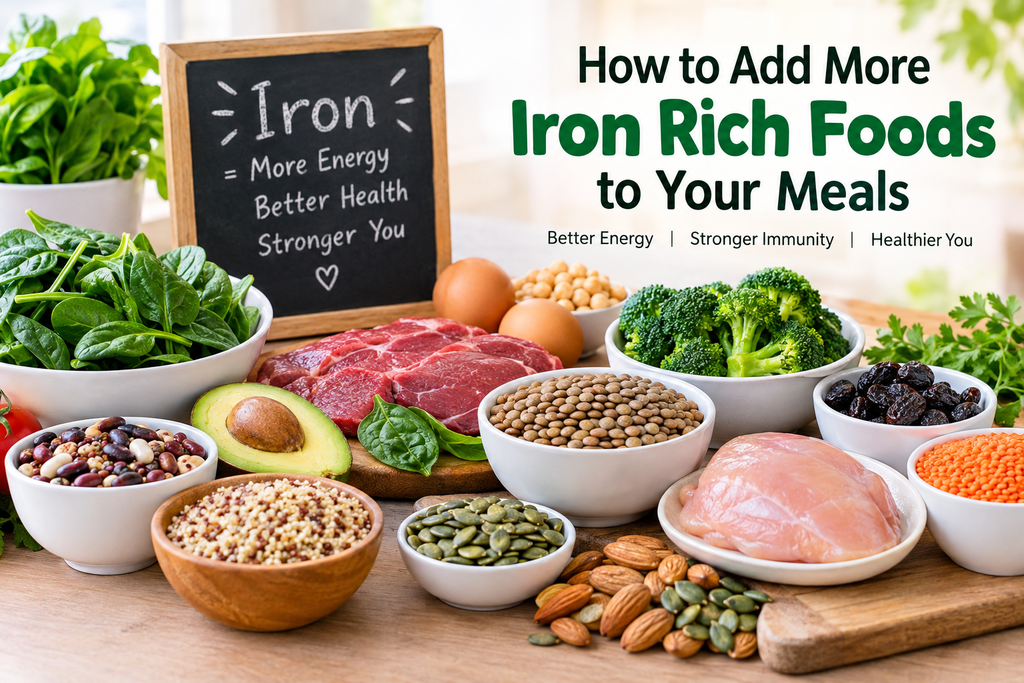
There are two main types of dietary iron. Heme iron is found mainly in animal foods such as meat, poultry, and seafood. Nonheme iron is found in plant foods such as beans, lentils, spinach, seeds, and fortified grains.
From my experience of learning about nutrition, one useful approach is not to focus only on one source. Instead, I prefer combining different iron rich foods throughout the day. This makes meals more interesting and can help create a balanced diet.
Start Your Day With an Iron Rich Breakfast
Breakfast is a great opportunity to add more iron to your diet. Many people choose a quick breakfast and do not think about its nutritional value. With a few small changes, breakfast can become a useful source of important nutrients.
Eggs can be included in a balanced breakfast, especially when served with vegetables and whole grain toast. Some breakfast cereals are also fortified with iron, so checking the nutrition label can help you identify useful options.
Another simple choice is oatmeal topped with pumpkin seeds, nuts, or dried fruit. Oats can provide some iron, while seeds and nuts can add additional nutrients and healthy fats.
If you enjoy smoothies, you can also blend leafy greens with fruit and yogurt or another suitable ingredient. The important thing is to create a breakfast that is filling, varied, and easy enough to maintain.
Add Lentils and Beans to Lunch
Lentils and beans are among my favorite foods for creating affordable and nutritious meals. They can be added to soups, salads, rice dishes, and many other recipes.
Lentils are particularly easy to prepare and can be combined with vegetables and whole grains for a satisfying meal. Chickpeas can also be added to salads or blended into hummus.
Beans are another convenient option. Kidney beans, black beans, white beans, and other varieties can provide plant based iron along with protein and fiber.
One thing I like about these foods is that they do not require an expensive meal plan. A simple bowl of lentils with vegetables and rice can be both filling and nutritious.
Include Leafy Green Vegetables
Leafy green vegetables are another useful addition when trying to eat more iron rich foods. Spinach, kale, and other dark green vegetables can be included in many everyday meals.
You can add spinach to eggs, soups, pasta, rice dishes, or sandwiches. If you already enjoy vegetables, increasing the amount of leafy greens in your meals can be a very simple change.
I personally think vegetables are easier to eat regularly when they are combined with foods you already enjoy. Instead of preparing a completely separate vegetable dish, try adding spinach or another leafy green to an existing meal.
Eat More Seeds and Nuts
Seeds and nuts are convenient foods that can help add nutrients to your daily diet. Pumpkin seeds, sesame seeds, chia seeds, cashews, almonds, and other varieties can be used in different ways.
You can sprinkle seeds over oatmeal, yogurt, salads, or cooked vegetables. Nuts can work well as a simple snack or can be added to breakfast.
Because nuts and seeds are energy dense, portion size is worth considering. A small serving can be enough to add variety and nutrients without making your meal unnecessarily heavy.
Choose Meat and Seafood When Appropriate
For people who eat animal products, meat and seafood can be useful sources of iron. Beef and other meats contain heme iron, which the body generally absorbs more efficiently than nonheme iron from plant foods.
Chicken and seafood can also be part of a balanced eating pattern. The key, in my opinion, is variety. You do not need to eat large amounts of meat at every meal to create a nutritious diet.
A meal containing lean meat, vegetables, and a whole grain can provide a combination of protein, iron, fiber, vitamins, and other nutrients.
Combine Iron Rich Foods With Vitamin C
One of the most useful meal planning habits is combining plant based iron sources with foods containing vitamin C. Vitamin C can improve the absorption of nonheme iron from plant foods.
This can be very easy to do. For example, you could add tomatoes and bell peppers to a bean salad. You could eat an orange or another citrus fruit with a meal. Strawberries, kiwi, broccoli, and other fruits and vegetables can also provide vitamin C.
This does not require complicated recipes. I find that simply adding colorful fruits and vegetables to meals is an easy way to make a diet more balanced.
Be Mindful of Tea and Coffee Around Meals
Tea and coffee are popular drinks, but certain compounds in them can reduce the absorption of nonheme iron when consumed with meals.
If you are specifically trying to increase your iron intake, you may want to avoid having large amounts of tea or coffee directly with your main iron rich meals. Having them at another time may be a simple strategy.
This does not mean you have to stop drinking tea or coffee. It is more about timing and maintaining a balanced eating routine.
Add Iron Rich Snacks
Snacks can also contribute to your overall daily iron intake. Instead of always choosing highly processed snacks, consider options such as nuts, seeds, dried fruit, hummus with vegetables, or fortified whole grain foods.
A small handful of pumpkin seeds can be an easy choice. Hummus made from chickpeas can be paired with carrots, cucumber, or whole grain bread.
Dried fruits such as raisins and apricots contain some iron, although they are also concentrated sources of natural sugar and calories. I think they work best as part of a varied snack rather than as the only source of nutrition.
Make Simple Food Swaps
You do not have to completely change your diet to eat more iron rich foods. Simple food swaps can make a difference over time.
For example, you can replace some refined grains with fortified or whole grain options. You can add beans to a meal that normally contains only vegetables. You can add spinach to an omelet or include lentils in soup.
Another simple idea is to add seeds to meals that already exist in your routine. These small changes are easier to maintain than trying to follow a strict diet overnight.
Plan Balanced Meals
I believe meal planning becomes much easier when you think about the whole plate rather than one nutrient.
A balanced meal can include an iron rich food, a source of protein, vegetables or fruit, and a suitable source of carbohydrates. For example, lentils with rice and vegetables can create a satisfying meal. Another option could be grilled chicken with leafy greens and a whole grain.
The goal is not perfection. The goal is consistency. Eating a variety of nutritious foods regularly is more realistic than trying to make every meal perfect.
Do Not Ignore Possible Iron Deficiency
Although food is an important source of iron, some people may have a higher risk of iron deficiency. Certain health conditions, dietary patterns, life stages, and blood loss can affect iron needs.
If you regularly experience unusual tiredness, weakness, shortness of breath, dizziness, or other concerning symptoms, it is better to speak with a qualified healthcare professional rather than assuming that you simply need more iron.
Iron supplements should also not be taken casually. Too much iron can be harmful, and the right approach depends on individual needs. A healthcare professional can recommend appropriate testing and treatment when necessary.
Final Thoughts
Adding more iron rich foods to your meals does not have to be difficult. From my point of view, the easiest approach is to make small changes that fit naturally into your normal eating habits.
Include foods such as lentils, beans, leafy greens, seeds, nuts, eggs, meat, seafood, and fortified grains according to your dietary preferences. Combine plant based iron sources with vitamin C rich fruits and vegetables when possible. Pay attention to meal timing if you regularly drink tea or coffee, and focus on creating balanced meals rather than depending on one food.
The most important thing is consistency. A healthy diet is built from everyday choices, not from a single perfect meal. By gradually adding more iron rich foods to breakfast, lunch, dinner, and snacks, you can make your overall diet more varied and nutritious.
If you have concerns about iron deficiency or your individual iron requirements, especially if you have ongoing symptoms, it is always sensible to discuss them with a healthcare professional.


