Portion control is one of the simplest ways to improve eating habits without completely changing the foods you enjoy. In my opinion, healthy eating does not always mean giving up your favorite meals. Sometimes, the bigger difference comes from learning how much food your body actually needs.
Many people eat more than they realize because large plates, oversized servings, snacks, and distracted eating can make it easy to consume extra calories. This does not mean that every meal needs to be measured or that you should constantly count calories. Instead, simple portion control can help you become more aware of your food and develop healthier eating habits over time.
If you are a beginner, there is no need to make portion control complicated. A few practical changes at home can make a noticeable difference.
What Is Portion Control?
Portion control means being aware of the amount of food you eat at each meal or snack. It is different from completely restricting food. The goal is to give your body an appropriate amount of food while still enjoying a balanced diet.
I believe portion control works best when it feels realistic. If a method is too strict, it can become difficult to follow for a long time. Simple habits such as using a smaller plate, eating slowly, and paying attention to hunger can be much easier to maintain.
Portion sizes can also vary depending on your age, activity level, personal needs, and the type of food you are eating. Therefore, portion control should be treated as a helpful guide rather than a strict rule.
Start With a Smaller Plate
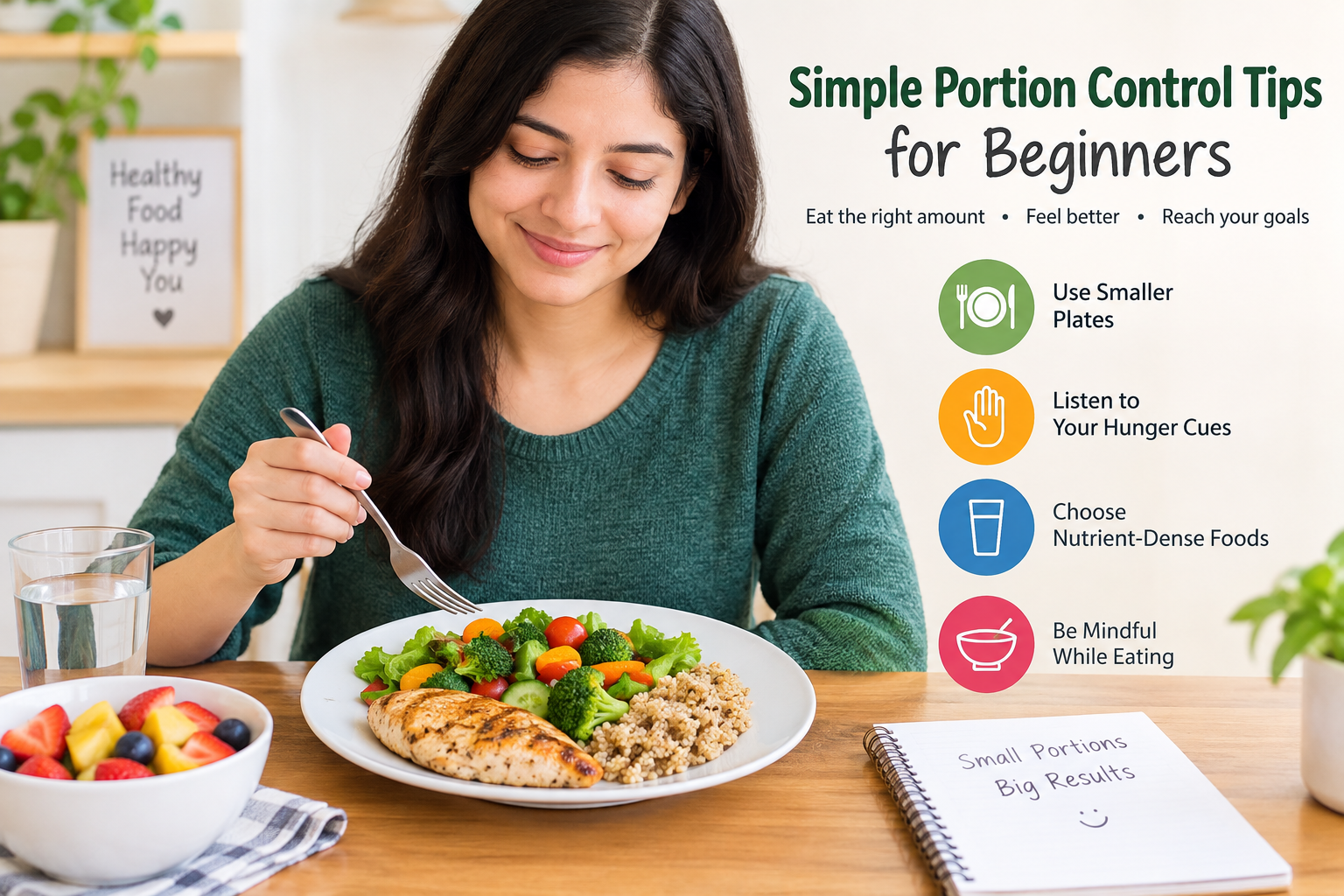
One of the easiest portion control tips for beginners is to use a smaller plate. When we use a large plate, it can feel normal to fill the entire surface with food. A smaller plate naturally gives you less space to serve a large amount.
This does not mean you have to eat tiny meals. Instead, try putting a reasonable amount of food on your plate and see how satisfied you feel afterward.
I find this approach particularly useful at home because it does not require special equipment or complicated calculations. You can simply change the plate you use for regular meals.
Fill Half Your Plate With Vegetables
Vegetables can be an important part of a balanced meal because they provide fiber, vitamins, minerals, and other nutrients. Filling a large portion of your plate with vegetables can also make your meal look satisfying without relying heavily on calorie dense foods.
You can choose vegetables you actually enjoy. Salad, cucumber, tomatoes, carrots, spinach, broccoli, cauliflower, green beans, and cooked seasonal vegetables are all practical options.
The important thing is variety. You do not need to eat the same vegetables every day. Changing your choices can make healthy meals more enjoyable.
Include a Reasonable Protein Portion
Protein can help make meals more satisfying and can be part of a balanced eating pattern. Depending on your preferences, protein sources can include eggs, chicken, fish, beans, lentils, yogurt, cottage cheese, or other suitable foods.
Instead of filling most of your plate with one protein source, try creating a balanced plate with protein, vegetables, and a suitable amount of carbohydrates.
For example, you could have grilled chicken with vegetables and a moderate serving of rice. Another meal could include lentils, salad, and a small serving of bread.
Be Mindful of Carbohydrate Portions
Rice, bread, pasta, potatoes, and other carbohydrate foods can easily become large portions, especially when you are hungry. These foods do not automatically need to be avoided. The key is being aware of how much you are eating.
If you usually take a very large serving of rice, try reducing it slightly and adding more vegetables and a suitable protein source. Small changes can be easier to maintain than suddenly removing an entire food group.
I think this is one of the most practical approaches for beginners because it allows you to continue eating familiar meals while becoming more aware of portion sizes.
Eat Slowly
Eating quickly can make it difficult to notice when you are becoming comfortably full. When you eat slowly, you have more time to pay attention to the taste and texture of your food and recognize your body’s signals.
Try putting your fork or spoon down occasionally while eating. Take your time and avoid rushing through your meal.
You do not need to turn every meal into a long process. Even slowing down slightly can help you become more mindful about how much you are eating.
Listen to Your Hunger and Fullness
Learning to recognize hunger and fullness is another useful portion control habit. Before eating, ask yourself whether you are physically hungry or whether you are eating because of boredom, stress, habit, or simply because food is available.
During a meal, pay attention to how you feel. You may notice that you become comfortably satisfied before your plate is completely empty.
This does not mean you should ignore genuine hunger. If you are still hungry after finishing your meal, you can choose a sensible additional portion. Portion control is about awareness rather than punishment.
Avoid Eating Directly From the Package
Snacking directly from a large package can make it difficult to notice how much you have eaten. This is especially common with chips, cookies, crackers, nuts, and other snack foods.
A simple solution is to put a reasonable serving into a small bowl before eating. Then put the package away.
This small habit can make you more aware of your food intake without requiring you to completely avoid your favorite snacks.
Pay Attention to Liquid Calories
Drinks can sometimes contribute a significant amount of calories without making you feel as full as a meal. Sugary sodas, sweetened coffee, flavored drinks, and other beverages can be easy to consume throughout the day.
Water is a simple everyday choice for staying hydrated. You can also consider unsweetened tea or other lower calorie beverages depending on your preferences.
I think it is helpful to look at your entire eating routine rather than focusing only on food portions. What you drink can also become part of your overall portion control strategy.
Use Your Hand as a Simple Guide
You do not always need a food scale to estimate portions. Your hand can provide a simple visual guide when you are away from home or eating without measuring tools.
For example, you can think of a palm sized portion when considering protein foods. A cupped hand can provide a general visual reference for some carbohydrate foods, while vegetables can take up a larger portion of your plate.
These are only general guides. Individual nutritional needs vary, so you should not treat hand portions as exact measurements.
Keep Healthy Foods Easy to Reach
Your environment can strongly influence your eating habits. If healthier foods are easy to see and access, you may be more likely to choose them.
Keep fruits, vegetables, yogurt, and other nutritious options where you can easily notice them. Store snack foods in less visible places rather than keeping them directly on the kitchen counter.
This simple change can make portion control easier because you are creating an environment that supports your goals.
Be Careful With Restaurant Portions
Restaurant portions can sometimes be much larger than the amount you would normally serve yourself at home. If you are eating out, you can consider sharing a meal, ordering a smaller portion when available, or saving part of your meal for later.
You do not have to avoid restaurants to practice portion control. The goal is simply to become more aware of how much food is being served.
Eating slowly can also help because you may realize that you are satisfied before finishing everything on the plate.

Do Not Try to Be Perfect
One of the biggest mistakes beginners can make is expecting perfect results immediately. Healthy habits take time to develop.
If you eat a larger meal one day, there is no need to feel guilty or skip your next meal. Simply return to your normal routine.
In my view, consistency is much more important than perfection. A practical eating habit that you can follow most days is usually more useful than an extremely strict plan that you cannot maintain.
Make Portion Control a Daily Habit
The best way to become comfortable with portion control is to practice it regularly. Start with one or two changes instead of trying to change everything at once.
You could begin by using a smaller plate and eating more slowly. After that becomes comfortable, you could start paying more attention to snack portions and the amount of sugary drinks you consume.
Over time, these small habits can become a normal part of your daily routine.
Final Thoughts
Simple portion control tips for beginners do not need to involve strict diets or complicated calculations. In my opinion, the most useful approach is to become more aware of what you eat, how much you eat, and how you feel while eating.
Using smaller plates, adding more vegetables, choosing reasonable protein portions, being mindful of carbohydrates, eating slowly, and paying attention to hunger and fullness can all help create better eating habits.
Remember that portion control is not about eating as little as possible. It is about finding a reasonable balance that supports your lifestyle and personal needs.
Start with small changes and give yourself time to adjust. When portion control becomes a normal part of your daily routine, healthy eating can feel much simpler and more manageable.