Controlling portion sizes at home can make a big difference in the way we eat every day. In my experience, healthy eating is not always about removing favorite foods or following strict diets. Sometimes, the simple solution is learning how much food we actually need on our plate. When portions become too large, it is easy to eat more calories than the body needs without even realizing it.
The good thing is that portion control does not have to be complicated. You do not always need special equipment or a strict meal plan. With a few simple changes in your kitchen and eating habits, you can become more aware of your food portions and make better choices.
In this article, I will share some simple ways to control portion sizes at home that can easily become part of your daily routine.
Understand the Difference Between Portion and Serving
One of the first things I think we should understand is the difference between a portion and a serving. A serving is a suggested amount of food listed on a package or nutrition label. A portion is the amount of food you actually decide to eat.
These two amounts are not always the same. For example, a food package may contain several servings, but it can be very easy to eat the entire package while watching television.
Understanding this difference can help you become more aware of how much you are eating. You do not need to measure every meal forever, but knowing approximate serving sizes can help you develop better habits.
Use Smaller Plates and Bowls
One of the easiest portion control tips is using smaller plates and bowls. A large plate can make a normal amount of food look small, which may encourage you to add more.
When you use a smaller plate, the same amount of food can look more satisfying. This simple visual change can help you feel that your plate is full without adding excessive food.
I find this especially useful for foods such as rice, pasta, potatoes and other filling carbohydrates. Instead of completely avoiding them, I prefer to pay attention to the amount I put on my plate.
Fill Half Your Plate With Vegetables
Adding more vegetables is another simple way to manage portion sizes at home. Vegetables are generally rich in fiber, vitamins and minerals, and many vegetables can add volume to a meal without making the meal unnecessarily heavy.
A simple approach is to make about half of your plate vegetables, while dividing the remaining space between protein and other foods such as rice, potatoes or whole grains.
For example, you could have grilled chicken with cooked vegetables and a moderate amount of rice. This creates a balanced plate while keeping portions easier to manage.
Measure Food When You Are Learning
Measuring food can be helpful when you are first learning about portion control. Measuring cups, spoons and a kitchen scale can show you what different amounts actually look like.
You do not have to measure everything you eat forever. I see measuring as a learning tool. After using it for some time, you may start recognizing reasonable portions without needing to measure every meal.
This can be particularly useful for foods that are easy to overeat, such as nuts, cooking oils, cheese, cereal, rice and pasta.
Avoid Eating Directly From the Package
Eating directly from a packet or container can make portion control much harder. When you have a large bag of snacks beside you, it is easy to keep eating without noticing how much you have consumed.
Instead, put the amount you want into a small bowl and put the package away. This creates a natural stopping point.
This habit is especially useful when eating snacks while watching television, working or using your phone. When food is constantly within reach, it becomes easier to eat without paying attention.
Eat Slowly and Pay Attention
Eating slowly is one of the most useful habits for portion control. When we eat quickly, we may finish our food before our body has enough time to recognize that we are becoming full.
Try putting your fork or spoon down occasionally while eating. Take your time to chew your food and notice its taste and texture.
In my opinion, mindful eating is not about making every meal perfect. It is simply about paying more attention to what you are doing instead of eating automatically.
Use Your Hand as a Portion Guide
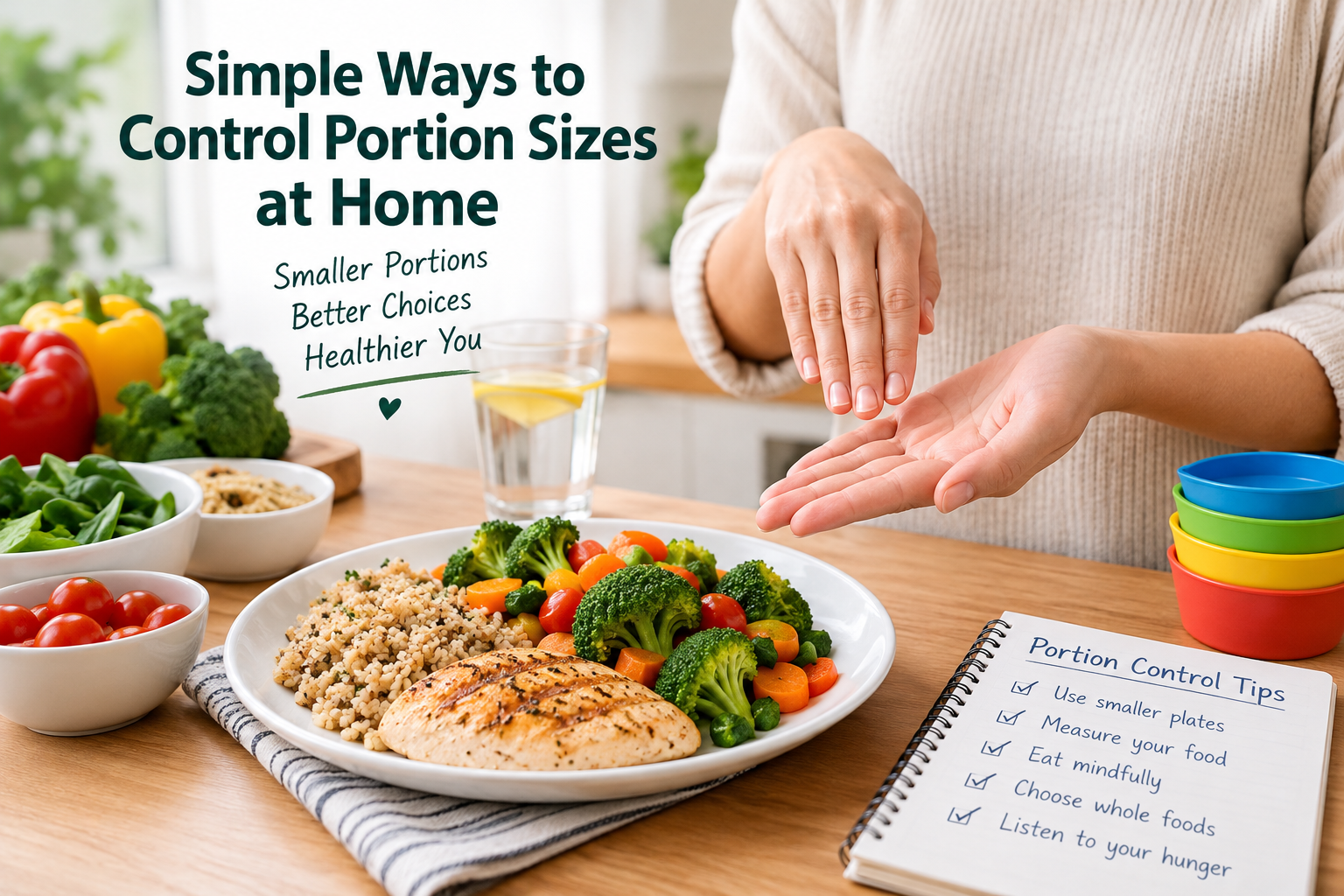
Your hands can provide a simple visual guide when you do not have measuring tools available.
For many people, the palm can be used as a rough guide for a portion of protein such as chicken, fish or meat. A cupped hand can provide a simple reference for foods such as rice or other carbohydrates. A thumb can be used as a rough visual guide for foods such as nut butter or similar high calorie foods.
These are only general guides because everyone’s body and nutritional needs are different. However, they can make portion control easier when you are eating away from home or preparing a quick meal.
Do Not Skip Meals Just to Eat Less Later
Some people try to control portions by skipping meals. I do not think this is a practical habit for most people. Going for long periods without eating can leave you extremely hungry and may make it harder to control portions at your next meal.
Instead of skipping meals, try to create a regular eating routine that includes satisfying foods.
A balanced meal containing protein, vegetables, whole grains or other carbohydrates, and healthy fats can help you feel satisfied and make it easier to avoid unnecessary overeating later.
Keep Healthy Foods Easy to Reach
Your kitchen environment can influence your eating habits. If healthier foods are easy to see and reach, you may be more likely to choose them.
Keep fruits, vegetables and other nutritious foods in convenient places. You can wash and prepare some vegetables in advance so they are ready when you need them.
At the same time, you do not have to completely remove your favorite treats. Keeping them in smaller packages or less visible places can make portion control easier.
Serve Food Before Sitting Down
Another simple habit is to serve your meal in the kitchen instead of placing large serving dishes on the dining table.
When a large dish of food is directly in front of you, taking another serving can become automatic. If you serve your portion first and leave the remaining food in the kitchen, you create a small pause before getting more.
That pause gives you an opportunity to ask yourself whether you are actually hungry or simply eating because more food is available.
Be Careful With High Calorie Extras
Sometimes the main meal is not the biggest issue. Extra ingredients can quietly increase the total amount of calories in a meal.
Sauces, dressings, butter, cheese, mayonnaise, sugar and cooking oils can add a significant amount of energy even when used in small amounts.
This does not mean you need to avoid these foods completely. Instead, try using smaller amounts and pay attention to how much you add.
For example, rather than pouring dressing directly onto a salad, you can measure a small amount and add more only if needed.

Drink Water With Your Meals
Water can be a simple addition to a healthy eating routine. Keeping a glass or bottle of water nearby can also help you avoid automatically reaching for sugary drinks.
Sweetened beverages can be easy to consume quickly, and liquid calories may not feel as filling as solid food.
Choosing water more often can support better overall eating habits. You can also add lemon, cucumber or mint if you prefer a little flavor.
Listen to Your Hunger and Fullness
Portion control should not mean ignoring your body’s signals. One useful habit is learning to recognize the difference between physical hunger and eating out of boredom, stress or habit.
Before taking another serving, ask yourself whether you are still hungry. If you are comfortably satisfied, you may not need more food.
At the same time, there is no need to feel guilty if you occasionally eat more than planned. Healthy eating is about your overall habits rather than one meal.
Plan Portions When Preparing Meals
Meal preparation can make portion control much easier. If you cook a large amount of food, divide it into individual containers after cooking.
This gives you ready to eat meals with portions already decided. It can also make busy weekdays easier because you do not have to make food decisions when you are tired or hungry.
When preparing meals, try to include a variety of foods. A combination of vegetables, protein and a suitable carbohydrate source can create a more satisfying meal.
Avoid Distractions While Eating
Eating while watching television, scrolling through social media or working can make it difficult to notice how much food you are eating.
When possible, sit at a table and focus on your meal. You may find that you enjoy the food more and recognize fullness sooner.
Even if you cannot do this for every meal, practicing distraction free eating once a day can be a useful starting point.
Make Portion Control a Long Term Habit
The most important thing I have learned about portion control is that it should be realistic. Extreme restrictions may work for a short time, but simple habits are usually easier to maintain.
You do not need to completely change your diet overnight. Start with one or two changes. Use a smaller plate, add more vegetables, measure certain foods, or stop eating directly from packages.
Once these habits become comfortable, you can gradually add more.
Final Thoughts
Simple portion control at home can help you become more aware of your eating habits without making food feel complicated. Using smaller plates, measuring food when needed, adding more vegetables, eating slowly and avoiding distractions are all practical steps that can make a difference.
In my opinion, the goal should not be to eat as little as possible. The goal is to understand your portions and create meals that are satisfying, balanced and enjoyable.
Small changes can become powerful when you repeat them consistently. Instead of focusing on perfection, focus on building eating habits that you can comfortably continue for months and years. With patience and awareness, portion control can become a natural part of a healthier lifestyle.